An AI anime story generator helps creators build immersive worlds, draft character arcs, and design complex plots. In this guide, you’ll learn the key elements of anime worldbuilding, how to structure a compelling episodic plot, and how to use AnimeArc to brainstorm stories that hook your audience from the first minute.
Every great animated series starts with a spark—an original premise that challenges expectations and keeps viewers talking. However, staring at a blank screen waiting for inspiration can be exhausting. By using an AI Anime Story Generator to brainstorm concepts and outline dramatic arcs, creators can bypass writer's block and jump straight into refining their story's emotional core.
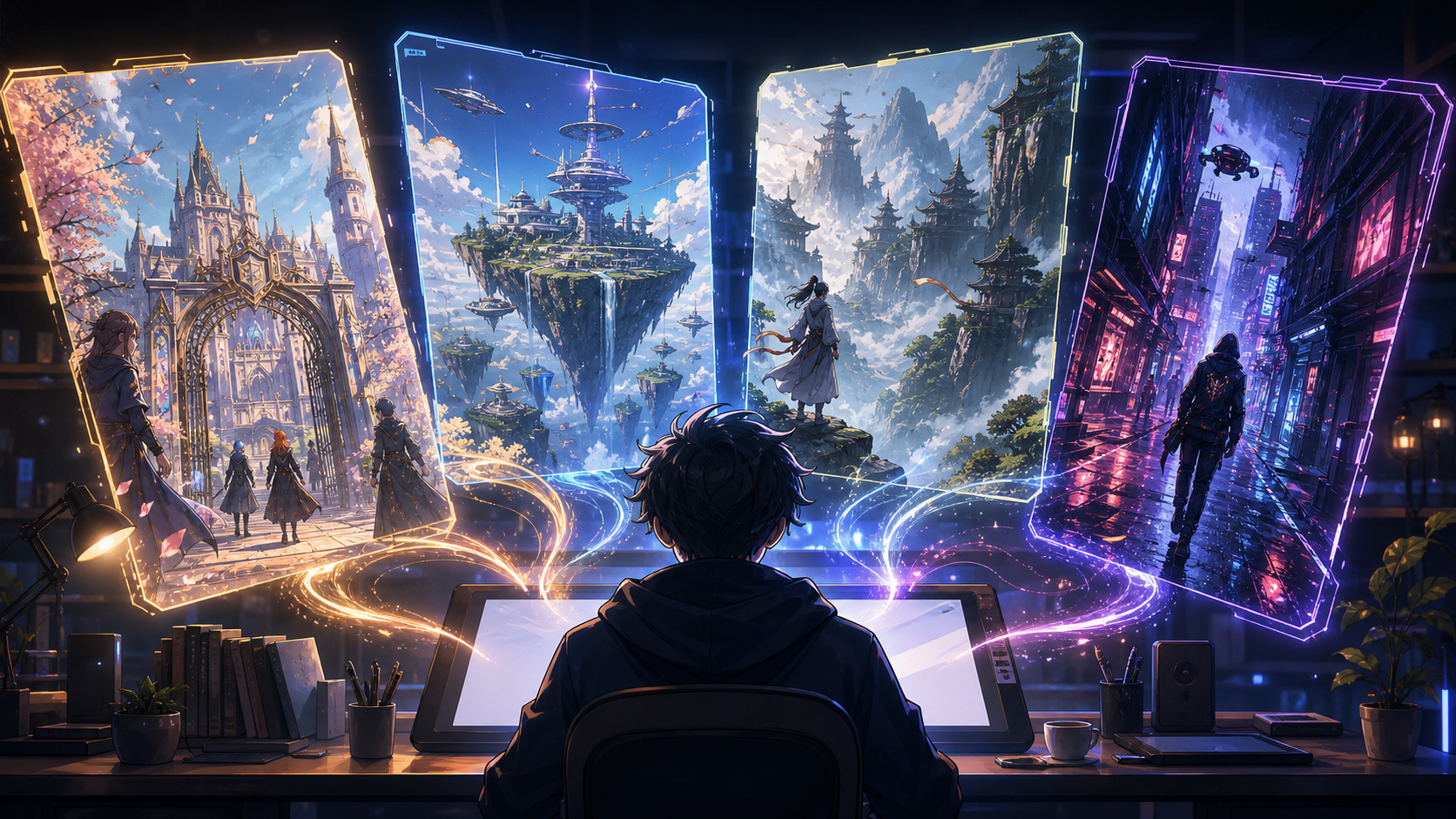 Figure 1: A story generator helps turn the blank page into multiple possible anime worlds, from fantasy academies to sci-fi floating islands and cyberpunk mysteries.
What Is an AI Anime Story Generator?
An AI Anime Story Generator is an advanced writing assistant tailored to the tropes, structures, and pacing of Japanese animation and web novels. Unlike standard text generators that write generic prose, an anime story generator understands specific genres—such as Isekai (another world), Xianxia (fantasy cultivation), Shonen (action/adventure), and Slice-of-Life—and generates ideas that fit their unique conventions.
By feeding the generator a brief prompt, creators can instantly receive:
- Premises & Hooks: High-concept setups (e.g., "A blacksmith's apprentice accidentally unlocks a system panel in a fantasy world").
- Worldbuilding Outlines: Rules of magic, societal hierarchies, and historic conflicts.
- Character Dynamics: Relationships, hidden motives, and rivalries.
- Plot Twists: Mid-point reveals and unexpected cliffhangers.
Using a story generator ensures that your narrative has structure and momentum, paving the way for consistent character development and episodic layouts.
How to Create an Anime Story Idea
Generating a successful anime premise requires blending familiar genre tropes with an unexpected twist. Here is a simple three-step method to brainstorm story ideas:
1. Select the Core Trope
Choose a popular foundation that your target audience already understands. This could be "reincarnation in a magical academy," "hoarding resources during a sudden ice age," or "a hidden superpower in a mundane world."
2. Inject a Conflict Multiplier
Add a rule or constraint that elevates the stakes. For example, if the hero reincarnates, give them a unique limitation: "Every time they level up, they lose a memory of their past life."
3. Establish the Ending Hook
Define the immediate goal or looming threat. What is the clock ticking down to? This creates tension and drives the story outline forward.
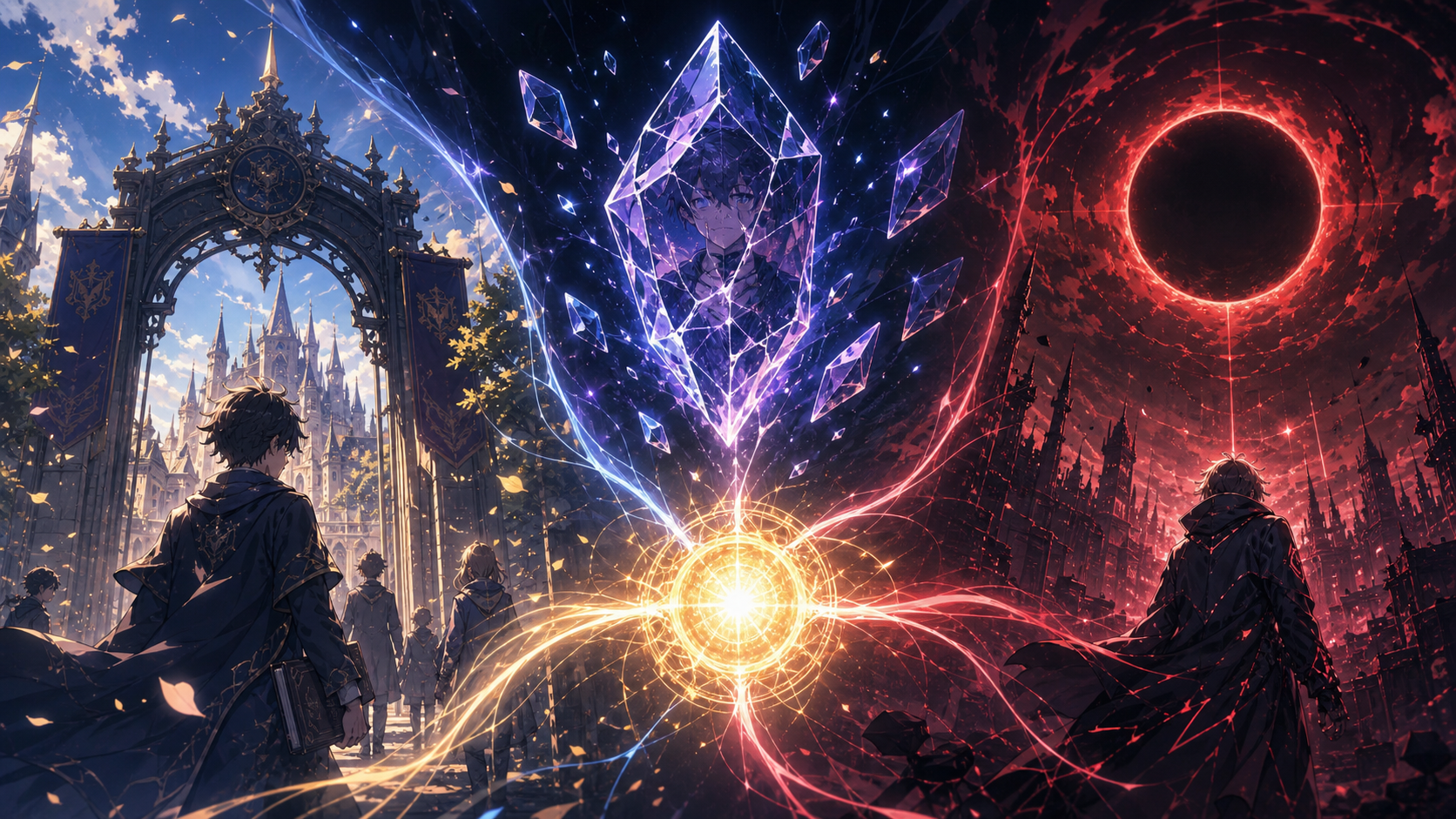 Figure 2: Strong anime premises usually combine a familiar trope, a sharper constraint, and a looming hook that pushes the episode forward.
Anime Story Structure
A compelling short-form anime drama episode follows a highly compressed narrative structure. To keep retention high, structure your generated stories into the following segments:
- The Hook (0 - 15 seconds): Establish the immediate danger or the high-concept premise. Shock the audience visually and audibly.
- The Setup (15 - 45 seconds): Introduce the protagonist's response to the hook. Explain their unique ability, system prompt, or conflict.
- The Climax (45 - 75 seconds): Present a confrontation or a high-energy action beat. This is where characters clash, spells are cast, or secrets are revealed.
- The Cliffhanger (75 - 90 seconds): End on a shocking revelation or unresolved conflict. Force the viewer to click "Next Episode" to find out what happens.
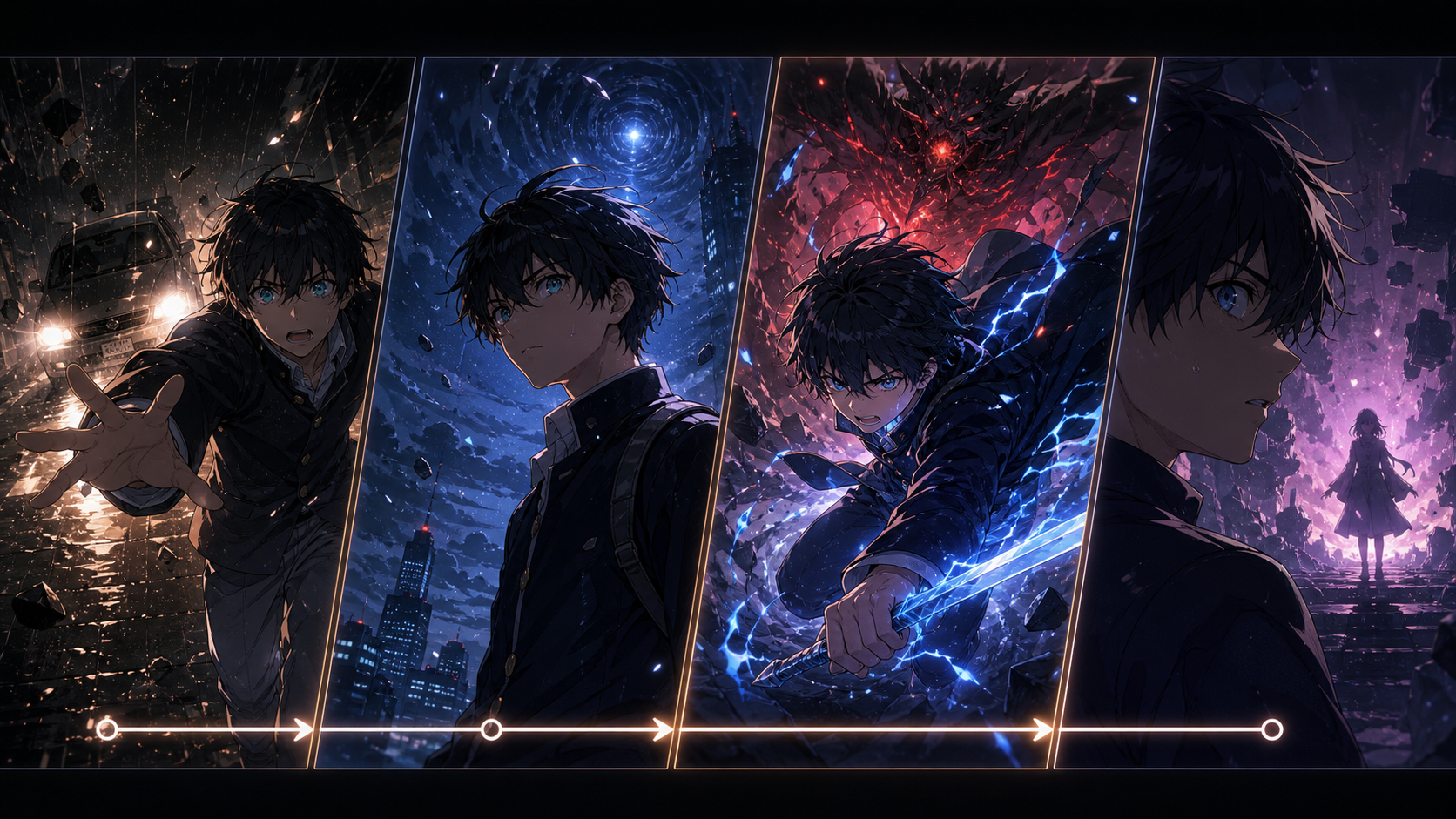 Figure 3: Short-form anime stories keep retention high by moving quickly from a visual hook into setup, climax, and an unresolved final beat.
Anime Story Example
Below is an example of an original sci-fi fantasy story conceptualized using our ideation engine.
- Story Title: Zero-Gravity Forge: Rebuilding the Lost Armada
- Premise: In a galaxy where planets have been shattered into floating islands of debris, a young mechanic discovers an ancient AI blueprint that allows her to build starships using gravity-manipulating slag.
- Main Character: Astra, a spunky, silver-haired scavenger wearing protective brass goggles and a grease-stained leather coat.
Episode 1 Outline:
- Scene 1 (The Hook): Astra scavenging on a drifting chunk of iron ore. Suddenly, a massive solar flare erupts, destabilizing the island's gravity field. Debris begins falling upward into space.
- Scene 2 (The Discovery): Clinging to a support beam, Astra's hand brushes against a buried metallic sphere. It lights up, projecting a holographic interface:
ARMADA SYSTEM: ONLINE. ACCESS GRANTED. - Scene 3 (The Action): Using the glowing system, Astra manifests a localized gravity anchor. She stabilizes the debris pile just as a rival scavenger pirate ship descends from the clouds, weapons armed.
- Scene 4 (The Cliffhanger): The pirate captain projects a hologram: "Hand over the sphere, scavenger, or we tear this island apart." Astra's wrist screen flashes a warning:
GRAVITY ANCHOR COLLAPSING IN 10 SECONDS.
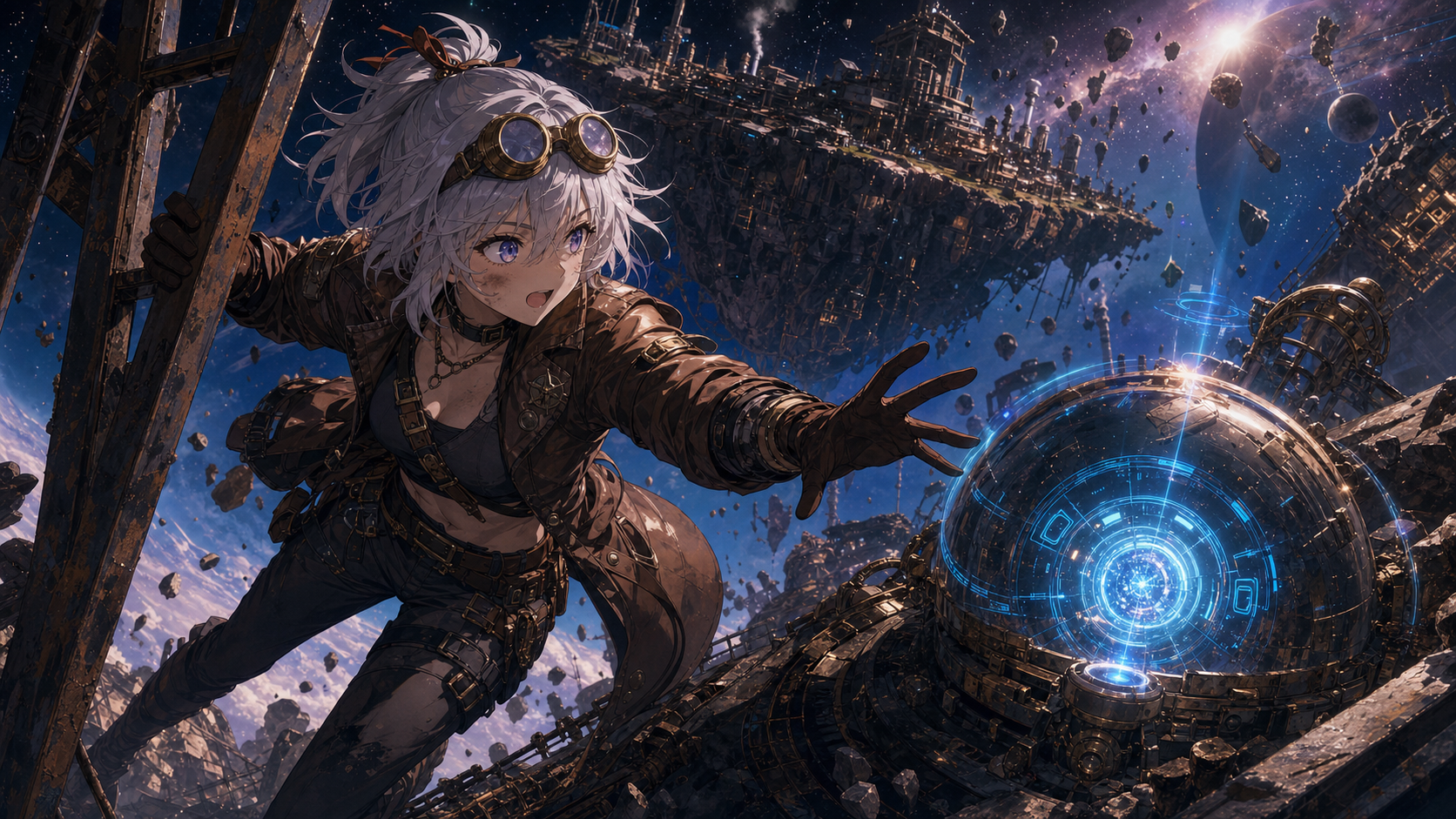 Figure 4: The Zero-Gravity Forge example turns worldbuilding into a concrete scene: Astra, unstable debris, the ancient sphere, and a threat arriving above the floating island.
From Story Idea to Full Anime Drama
Once you have generated a story outline that you love, you can seamlessly push it through the rest of the AnimeArc ecosystem to turn it into a visual series:
- Draft Dialogue: Use the AI Anime Script Generator to turn your scene outlines into formatted scripts with dialog beats.
- Create the Cast: Define visual characteristics for your protagonists and antagonists using the AI Anime Character Generator.
- Synthesize Keyframes: Generate visual sequences and camera shots using the AI Anime Storyboard Generator.
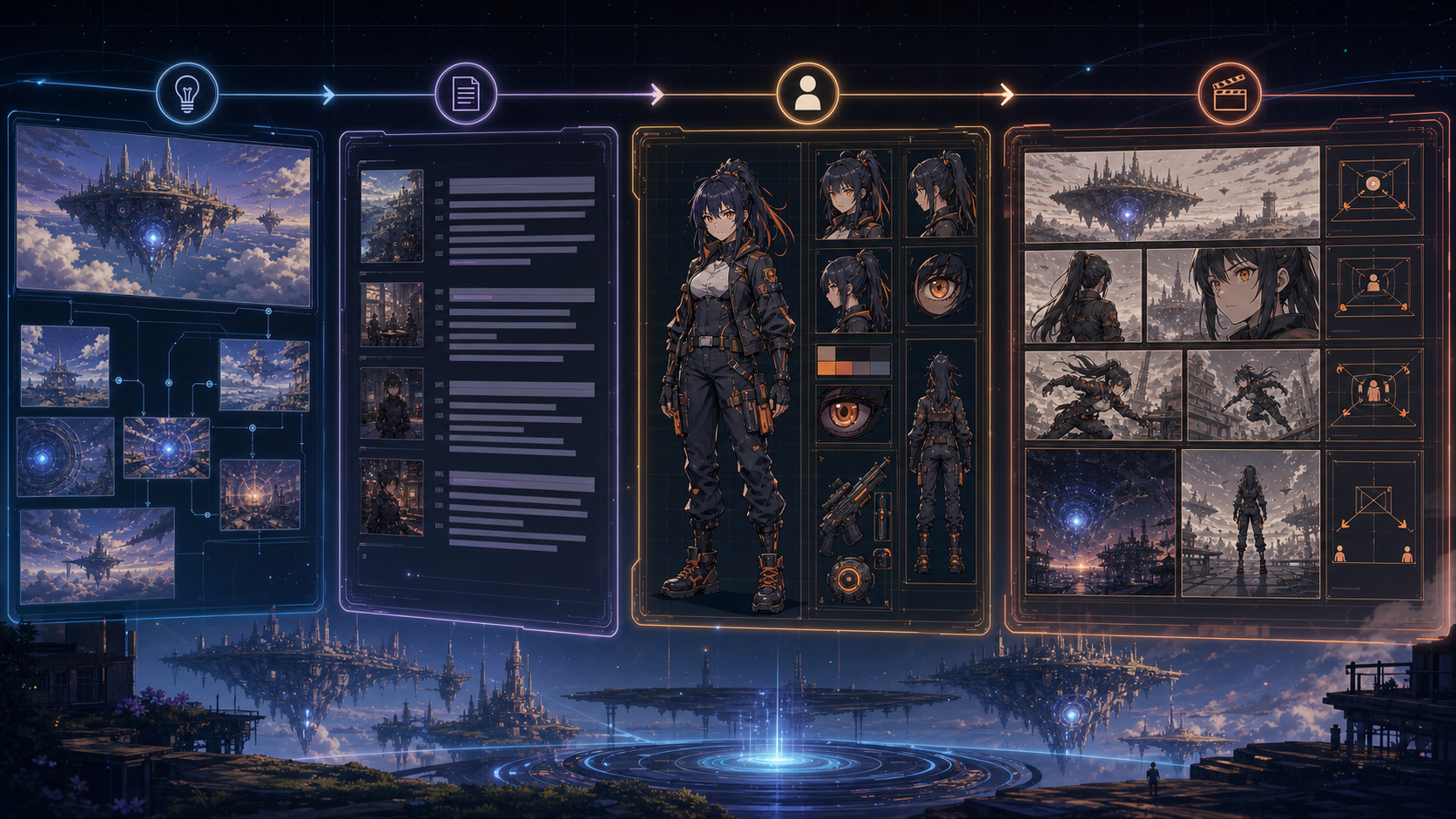 Figure 5: Once a story outline works, the same idea can move into dialogue, cast design, and storyboard keyframes without losing the worldbuilding details.
By maintaining a unified pipeline from story outline to storyboard export, AnimeArc makes it easy to scale your content production without losing track of your narrative details.
FAQ
What is an AI anime story generator?
An AI anime story generator is a narrative writing tool trained on anime and web novel tropes, helping creators generate premises, plot outlines, and character relationships.
Can I write stories in different genres?
Yes, the generator supports all major anime genres including Xianxia (cultivation), Isekai (portal fantasy), Shonen (action), Cyberpunk, and Romance.
How do I turn a generated story into a video?
After outlining your story, you can write scripts, generate character sheets, design visual storyboards, and export them as animated video clips using AnimeArc's suite of tools.
Do I own the rights to the generated stories?
Yes, all story concepts, outlines, and character structures generated by you on our platform are yours to use for commercial videos, mangas, or web novels.
Want to turn your anime story idea into a short drama workflow?
Submit your story idea with AnimeArc.
Submit My Story Idea