An anime character profile template helps writers and video creators design characters with clear appearance, personality, backstory, goals, weaknesses, relationships, and visual prompts. In this guide, you’ll get a copyable profile template, a filled example, and a workflow for turning character profiles into consistent anime drama scenes with AnimeArc.
Good anime characters are not just attractive designs. They need a reason to act, a flaw that creates tension, and a visual identity that viewers can recognize across episodes.
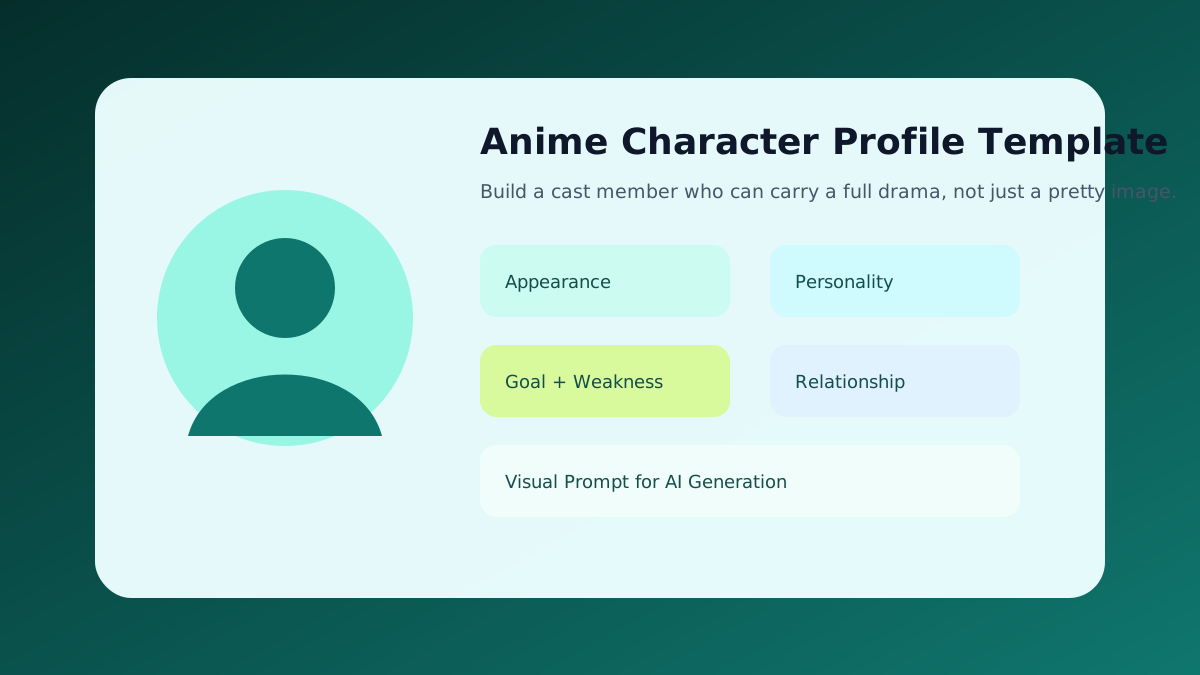 Figure 1: A character profile template connects visual design with story pressure so the character can carry a drama.
What Is an Anime Character Profile?
An anime character profile is a structured reference sheet for a story character. It describes what the character looks like, how they behave, what they want, what holds them back, and how they connect to other characters.
For AI-assisted anime production, a character profile also needs visual consistency details. If your protagonist changes face, hair, outfit, or color palette every time you generate a new scene, the audience will lose trust in the story. A profile solves this by giving the generator stable details to reuse.
A strong character profile should include both story and image information:
- Appearance and signature visual traits
- Personality and emotional patterns
- Backstory and source of conflict
- Goal and weakness
- Key relationships
- Visual prompt for generation
- Notes for what must stay consistent
The profile should never be only a list of aesthetic traits. “Silver hair, red eyes, black jacket” can describe a design, but it does not explain why the audience should care. A better profile connects those traits to the character’s role in the story. Maybe the red eyes reveal a forbidden bloodline. Maybe the black jacket belonged to a missing mentor. Maybe the silver hair is a side effect of using time magic too often.
For anime drama, the strongest characters are easy to recognize and easy to pressure. Recognition comes from visual consistency. Pressure comes from goals, weaknesses, and relationships. When both sides work together, the character can appear in many scenes without becoming repetitive.
For a tool-focused walkthrough, read the AI Anime Character Generator. This article focuses on the template itself.
Anime Character Profile Template
Copy this template before designing your next protagonist, rival, mentor, or villain:
Name:

Age:

Role in Story:

Appearance:
- Hair:
- Eyes:
- Outfit:
- Signature Detail:

Personality:

Backstory:

Goal:

Weakness:

Relationship:
- Ally:
- Rival:
- Secret Connection:

Visual Prompt:

Consistency Notes:

Drama Function:
The most important fields are Goal, Weakness, and Relationship. These create conflict. Without them, the character may look good but have nothing to do.
When you fill the appearance section, separate permanent traits from changeable traits. Permanent traits include face shape, eye color, hair structure, and signature objects. Changeable traits include temporary outfits, injuries, disguises, or emotional expressions. This distinction helps you keep the character consistent while still allowing the story to evolve.
The Drama Function field is also important. It forces you to explain why this character belongs in the story. A rival might expose the protagonist’s pride. A mentor might hide a betrayal. A best friend might represent the normal life the protagonist is losing. If a character has no drama function, consider merging them with another character.
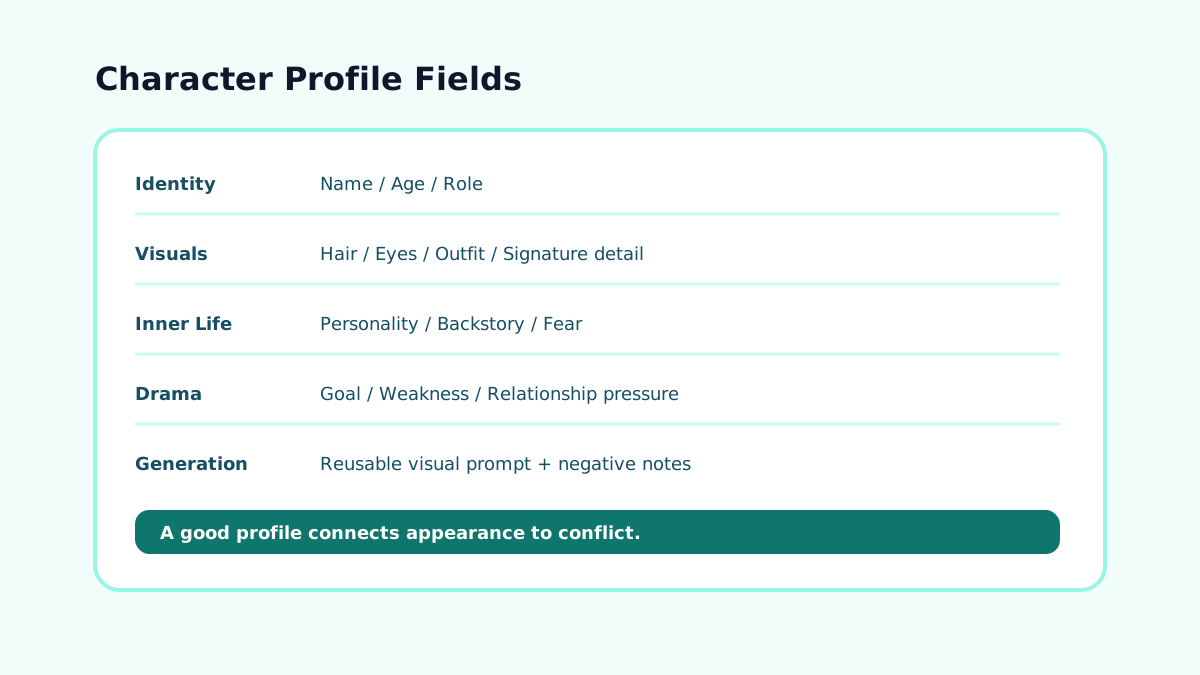 Figure 2: Each profile field has a job: some fields make the character recognizable, while others make the story dramatic.
Character Profile Example
Here is a filled example for an original anime drama character:
Name:
Iro Vale
Age:
17
Role in Story:
Protagonist / courier witch
Appearance:
- Hair: copper bob cut with uneven bangs
- Eyes: pale green, always tired-looking
- Outfit: navy courier coat, moon-stamp cloak pin, worn boots
- Signature Detail: a satchel full of letters that whisper at night
Personality:
Practical, sarcastic, secretly sentimental. Iro pretends not to care about people but remembers every delivery route by heart.
Backstory:
Iro was raised by a postal guild that delivers letters between magical cities. Her first failed delivery caused an entire town to lose its name.
Goal:
Deliver a sealed letter to a city that vanished yesterday.
Weakness:
She cannot read addresses without hearing the sender's grief.
Relationship:
- Ally: Nym, a talking crow who sorts cursed mail.
- Rival: Sella, a royal courier who believes Iro is reckless.
- Secret Connection: The vanished city may contain Iro's real family name.
Visual Prompt:
young anime courier witch, copper bob hair, tired pale green eyes, navy postal coat, moon-shaped cloak pin, leather satchel full of glowing letters, misty train platform, clean 2D anime style
Consistency Notes:
Keep copper bob hair, moon pin, navy coat, and glowing letter satchel consistent in every scene.
Drama Function:
Iro turns every delivery into an emotional mystery because each letter reveals what someone was afraid to say.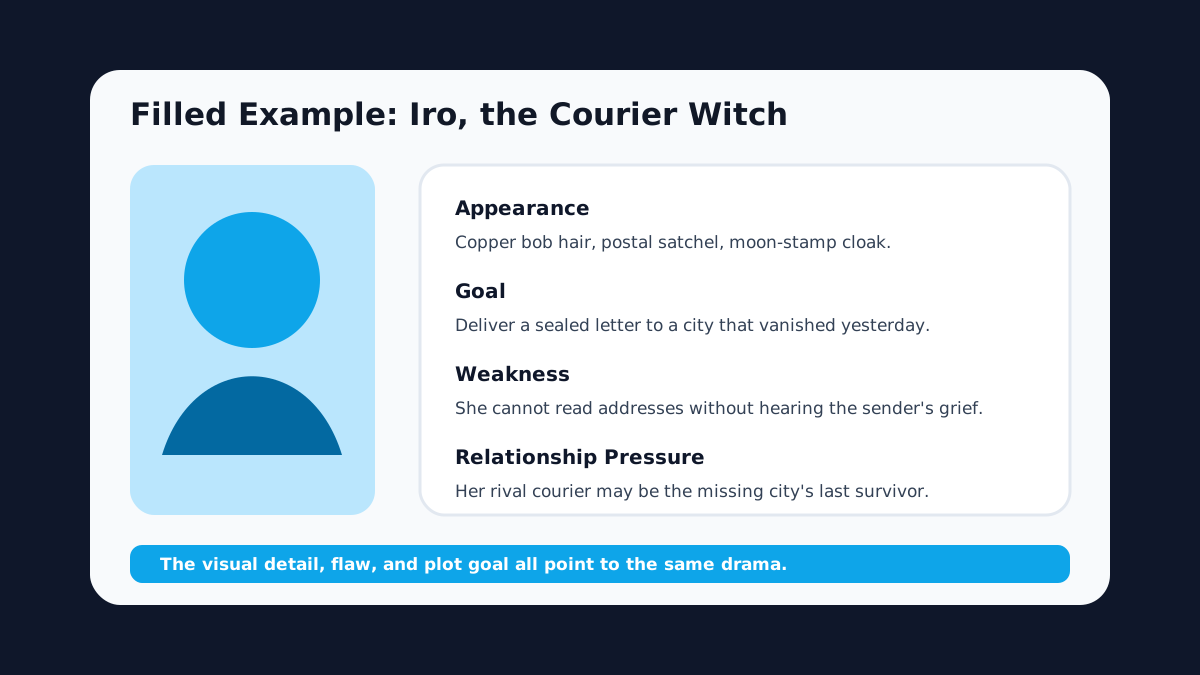 Figure 3: This filled profile gives Iro a recognizable silhouette, a production-ready visual prompt, and a story reason to appear in multiple episodes.
Notice how Iro’s design and conflict support each other. Her satchel is not just decoration; it is tied to the letters that drive the plot. Her weakness is not random; it makes every delivery emotionally dangerous. Her rival is not only an obstacle; she challenges Iro’s reckless way of helping people.
This is what makes a profile useful for more than one episode. You can place Iro in a train station, a floating post office, a ruined city, or a courtroom of ghosts, and the same core profile still gives the scene direction.
How to Make Characters More Dramatic
To make a character more dramatic, connect their visual design to their internal conflict.
If your character is a rebel pilot, do not only write “cool jacket and messy hair.” Ask why the jacket matters. Did it belong to a missing sibling? Is the messy hair a sign that they never sleep? Does the color palette connect to the faction they betrayed?
Use these checks:
- Goal check: Can the audience explain what the character wants in one sentence?
- Weakness check: Can the story pressure them in a way that power alone cannot fix?
- Relationship check: Does another character force them to reveal something?
- Visual check: Would viewers recognize them from silhouette, color, or signature object?
- Scene check: Can this profile generate at least five different story situations?
You can pair this template with the Anime Episode Outline Template to decide when the character’s weakness should appear. For scene planning, use the Anime Storyboard Template.
Avoid making every character equally intense. A cast works better when each profile has a different kind of pressure. One character may be driven by guilt, another by ambition, another by fear of abandonment. If everyone has the same emotional flavor, dialogue becomes flat. If every character has a different pressure point, scenes become easier to write.
Also avoid overloading the visual prompt. Too many details can make the character hard to reproduce. Choose a few core traits that must remain consistent, then allow smaller details to change based on the scene.
Generate Character Profiles with AnimeArc
AnimeArc can help turn your profile into a usable anime drama asset. Start by writing the profile fields, then use the AI Anime Character Generator to refine visual details and create a consistent character card.
After that, connect the character to a script:
- Use the profile’s goal and weakness to create conflict.
- Use the visual prompt to keep the character recognizable.
- Use relationship fields to create dialogue tension.
- Use consistency notes when generating storyboard frames.
- Use the AI Anime Drama Generator to connect the profile to scenes, outlines, and video prompts.
Want to build a cast that stays consistent across an entire anime drama? Try AnimeArc and turn this profile template into reusable characters, scripts, and storyboards.
For best results, create profiles for the protagonist and rival together. Their goals should collide, and their visual designs should contrast. If the protagonist uses warm colors and rounded shapes, the rival might use cool colors and sharp silhouettes. This makes story conflict easier to read visually.
Common Mistakes to Avoid
The first mistake is making the character too perfect. A flawless protagonist may look impressive, but drama needs friction. Give the character a weakness that can appear in scenes: fear of being forgotten, inability to ask for help, guilt over a failed promise, or a power that costs them something personal.
The second mistake is writing a backstory that never affects the plot. If the backstory says the character lost a mentor, that loss should shape their choices. Maybe they distrust teachers. Maybe they protect younger students too aggressively. Maybe they refuse to enter the place where the mentor disappeared.
The third mistake is using a visual prompt that changes the character every time. Keep core traits stable and place optional details in a separate note. “Copper bob hair, navy courier coat, moon pin” should remain fixed. Rain, injuries, expressions, and props can change by scene.
Finally, do not create characters in isolation. Profiles become stronger when they are designed around relationships. A rival, sibling, mentor, or former friend gives the character someone to react to.
Where This Template Fits in Production
Use the character profile template before writing final dialogue or generating full storyboards. A profile gives the rest of the project a stable cast. Without it, every later step has to guess who the character is, what they look like, and why they matter.
In a production workflow, the profile becomes a reference for multiple assets. The appearance section supports image generation. The personality section supports dialogue. The goal and weakness support episode outlines. The relationship section supports conflict scenes. The visual prompt and consistency notes support storyboard continuity.
This is also useful when you create more than one episode. A single well-written profile can guide dozens of scenes. Instead of reinventing the protagonist every time, you can reuse the same core identity and let the situation change around them.
For best results, create the protagonist, rival, and one emotional anchor character before generating a full episode. That gives your anime drama enough tension to create meaningful scenes.
You can also return to the profile after writing the first episode. If the script reveals a better weakness or a stronger relationship, update the template. A character profile is not a prison; it is a living reference that keeps the character coherent while the story becomes sharper.
FAQ
What is an anime character profile template?
An anime character profile template is a structured worksheet for defining a character’s appearance, personality, backstory, goal, weakness, relationships, and visual prompt.
What should every anime character profile include?
Every profile should include appearance, personality, goal, weakness, relationship pressure, and a visual prompt that can be reused during image or video generation.
How is a character profile different from a character sheet?
A character sheet often focuses on visual references. A profile includes story function too: what the character wants, why they struggle, and how they create drama.
Can AnimeArc generate characters from a profile?
Yes. You can use AnimeArc to turn the profile into a character card, then use that character in scripts, storyboards, and anime drama scenes.
How do I keep a character consistent?
Use specific visual details, avoid changing core features between prompts, and store consistency notes such as hair, outfit, color palette, and signature objects.
Ready to create a cast for your next anime story? Use the AI Anime Character Generator with this template and build your project in AnimeArc.
Want to turn your anime story idea into a short drama workflow?
Submit your story idea with AnimeArc.
Submit My Story Idea