An anime episode outline template helps creators plan a story scene by scene before writing full dialogue or generating storyboards. In this guide, you’ll get a simple outline structure, a copyable template, a filled episode example, and a workflow for generating anime episode outlines with AnimeArc.
Short anime episodes need fast structure. Viewers should understand the hook, conflict, emotional turn, and cliffhanger without waiting through long exposition. A strong outline lets you build that structure before spending time on scripts or visuals.
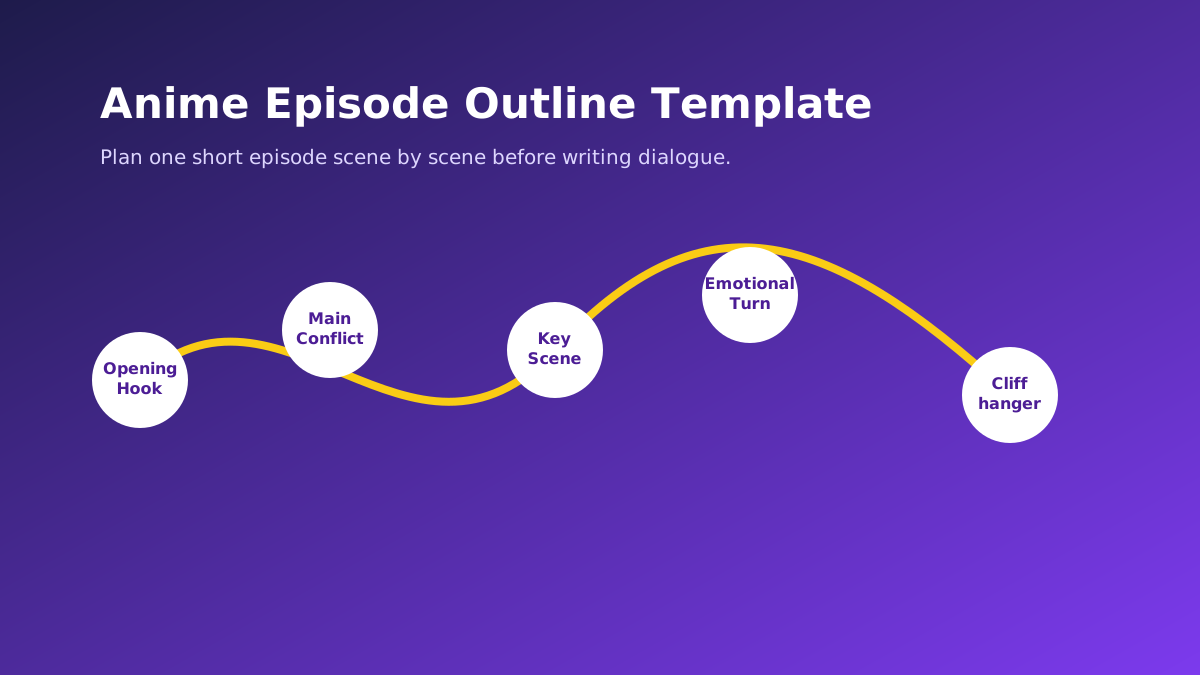 Figure 1: An episode outline maps the dramatic path before you write dialogue or generate visuals.
What Is an Anime Episode Outline?
An anime episode outline is a scene-by-scene plan for one episode. It is not the final script. Instead, it identifies what happens, why it matters, and how the episode ends.
For short-form anime drama, an outline usually needs fewer scenes than a traditional TV episode. The purpose is to keep the episode focused and easy to generate:
- What opens the episode?
- What does the protagonist want?
- What problem blocks them?
- What key scene changes the situation?
- What emotional turn gives the episode meaning?
- What cliffhanger leads into the next episode?
The outline stage is where you protect the episode from becoming too crowded. Many creators try to introduce the world, explain the magic system, reveal the villain, start a romance, and end with a battle in one short episode. That usually creates confusion. A better outline chooses one core dramatic movement and makes every scene support it.
For example, an episode might be about discovering that a train accepts memories as payment. That is enough. You do not also need to explain the entire history of the train, every passenger’s backstory, and the final villain. Those details can become future episodes.
If you need help creating the initial premise, start with the AI Anime Story Generator. If you already have a premise, this template helps you shape it into an episode.
Simple Anime Episode Structure
A short anime episode can follow this structure:
- Episode Title: A clear title that hints at the conflict.
- Opening Hook: The first moment that creates curiosity or danger.
- Main Conflict: The immediate problem the protagonist must face.
- Key Scene: The central scene where the story visibly changes.
- Emotional Turn: The moment the character learns, chooses, or loses something.
- Cliffhanger: The unresolved question that makes viewers want the next episode.
- Next Episode Setup: A small promise of what comes next.
This structure is useful because it separates story planning from script writing. You can outline first, then use the Anime Drama Script Template to expand each beat into dialogue and action.
The emotional turn is the part many outlines miss. A short episode should not only move from event to event. Something should change for the character. They may realize a friend lied, sacrifice a memory, accept a dangerous mission, or discover that their power has a cost. That internal shift makes the cliffhanger feel earned instead of random.
The next episode setup should be specific but not over-explained. A station name, a new message, a hand reaching from the darkness, or a familiar voice can be enough. The goal is to create momentum without solving the mystery.
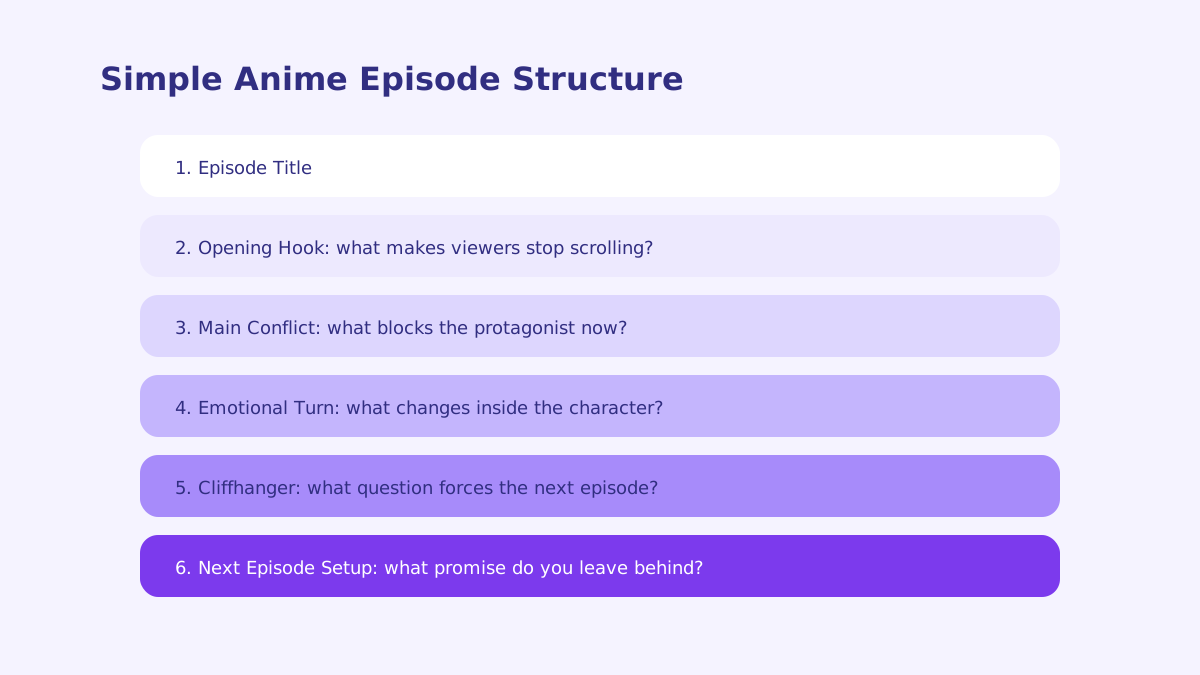 Figure 2: A simple episode structure keeps short anime stories from becoming too vague or too crowded.
Free Anime Episode Outline Template
Copy and fill this template:
Episode Title:

Series Premise:

Main Character:

Opening Hook:

Main Conflict:

Key Scene:

Emotional Turn:

Cliffhanger:

Next Episode Setup:

Characters Needed:

Locations Needed:

Visual Style Notes:
Keep each field short. If the outline becomes too long, you may be writing the script too early. The outline should help you see the episode at a glance.
When filling the template, use cause-and-effect language. “Mio gives up a memory, so the train opens the next door” is stronger than “Mio is sad and then the train moves.” Cause and effect helps the viewer understand why the scene matters.
You can also mark which fields are visual and which are emotional. Opening hooks and key scenes usually need strong images. Emotional turns need character choice. Cliffhangers need a concrete unanswered question.
Example Episode Outline
Here is a filled example:
Episode Title:
The Sky Train Stops at Midnight
Series Premise:
A group of students are chosen by a train that travels between forgotten memories.
Main Character:
Mio, a quiet student who remembers every train schedule but cannot remember her mother's face.
Opening Hook:
A train arrives on invisible rails above the school roof at exactly midnight.
Main Conflict:
The conductor says every passenger must pay with one memory before the train reaches the next station.
Key Scene:
Mio finds her own name already printed on an old passenger ticket.
Emotional Turn:
To save her best friend, Mio gives up the last memory of her mother's voice.
Cliffhanger:
The next station sign displays Mio's childhood bedroom.
Next Episode Setup:
Mio realizes the train may not travel through places. It travels through losses.
Characters Needed:
Mio, best friend Haru, faceless conductor.
Locations Needed:
School roof, train interior, memory station platform.
Visual Style Notes:
Dreamlike midnight palette, floating rails, soft violet windows, quiet magical realism.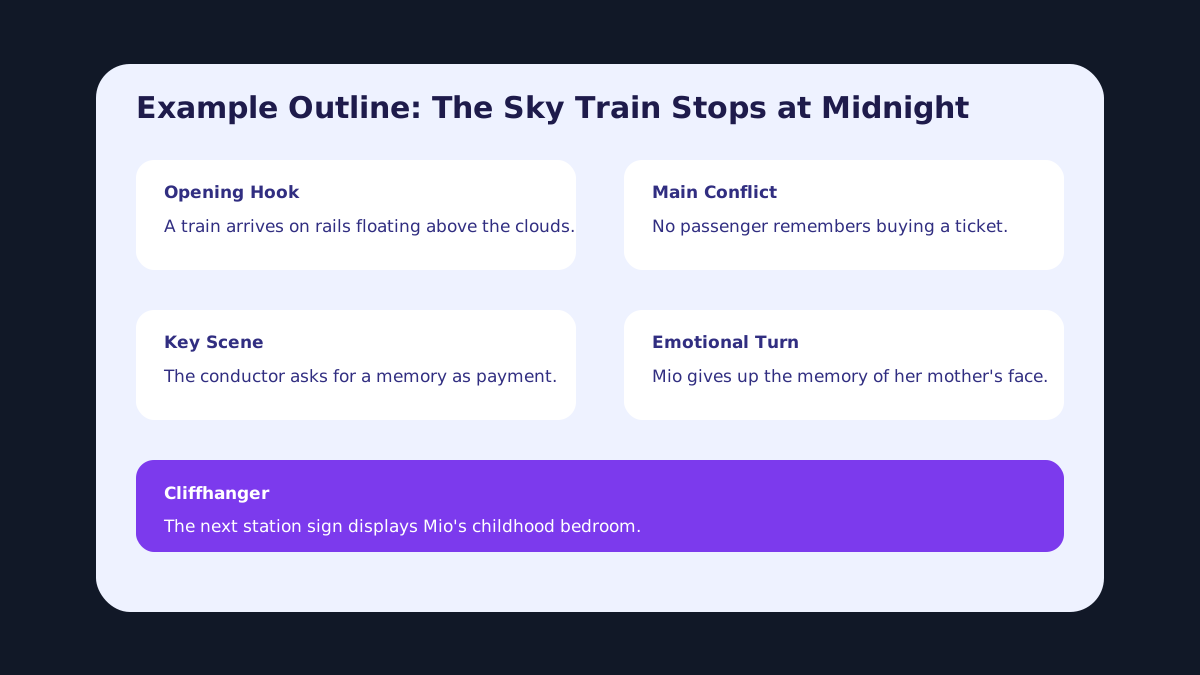 Figure 3: The filled outline defines the story path clearly enough to become a script, storyboard, or video prompt sequence.
This example works because each beat escalates the same idea. The train is not just a location; it creates the rules of the episode. The payment rule creates conflict. Mio’s missing memory connects the external mystery to her emotional wound. The cliffhanger does not introduce a random monster; it points directly at Mio’s past.
That is the standard to aim for. A good outline should make the next writing step easier. If you cannot imagine the script after reading the outline, the beats are probably too vague.
How to Generate Episode Outlines with AI
You can use AnimeArc to expand a premise into an outline or turn an outline into a full project.
Try this workflow:
- Write the series premise: Keep it to one or two sentences.
- Define the main character: Use the Anime Character Profile Template so the episode has emotional pressure.
- Generate outline options: Ask for three possible opening hooks or cliffhangers.
- Choose one structure: Do not combine every idea. Pick the clearest one.
- Turn outline into script: Use the AI Anime Script Generator or the Anime Drama Script Template.
- Create visual panels: Move the scenes into the AI Anime Storyboard Generator.
Want to turn this outline into a complete anime drama? Use the AI Anime Drama Generator to generate story, characters, scripts, storyboards, and video prompts in one workflow.
You can use the same outline template for different genres. In a school drama, the payment might be a secret. In a fantasy story, it might be a spell component. In a post-apocalyptic anime, it might be oxygen, food, or a battery charge. The structure stays useful because every episode still needs hook, conflict, turn, and cliffhanger.
Common Mistakes to Avoid
The first mistake is trying to outline an entire season inside one episode. A short episode only needs one meaningful story movement. If the outline introduces five mysteries and solves none of them, viewers may feel confused rather than curious.
The second mistake is making the opening hook unrelated to the ending. A good episode feels circular. If the hook is a strange train ticket, the cliffhanger should connect to that ticket, the train, or the price of boarding. This creates a sense that the episode was designed, not randomly assembled.
The third mistake is forgetting the emotional turn. Plot movement is not enough. The character should learn, lose, choose, betray, forgive, or sacrifice something. That emotional shift is what makes the outline useful for a script.
Finally, avoid generic cliffhangers. “A monster appears” can work, but it is stronger when the monster is tied to the protagonist’s goal or fear. Specific cliffhangers lead to stronger next episodes.
Where This Template Fits in Production
Use the episode outline template after you know the story premise and main character, but before writing the full script. The outline is the planning layer that decides whether the episode has a strong dramatic path.
In a full workflow, the outline connects story generation to script generation. The opening hook becomes the first scene. The main conflict shapes the dialogue. The emotional turn tells you what the character must feel or choose. The cliffhanger gives the next episode a clear starting point.
This template also helps with publishing consistency. If every episode in a series has a hook, conflict, turn, and next setup, the audience learns the rhythm of your story. That rhythm is important for short-form anime drama because viewers often decide within seconds whether to continue.
Once the outline works, you can expand it with the script template, then translate each script beat into storyboard panels.
If you are planning a series, save every finished outline in the same format. This makes it easier to compare pacing across episodes and avoid repeating the same hook or cliffhanger too often. Consistent outline structure gives your anime drama room to scale.
FAQ
What is an anime episode outline template?
An anime episode outline template is a planning worksheet that organizes one episode into a title, opening hook, main conflict, key scene, emotional turn, cliffhanger, and next episode setup.
How detailed should an episode outline be?
It should be detailed enough to explain the episode’s direction but short enough to scan quickly. Save full dialogue and camera instructions for the script and storyboard stage.
Can I use this template for short videos?
Yes. This structure works especially well for 60-90 second anime drama shorts because it focuses on hook, conflict, emotional turn, and cliffhanger.
What is the difference between an outline and a script?
An outline explains what happens. A script writes the actual scene actions, dialogue, emotions, and camera directions.
Can AnimeArc generate episode outlines?
Yes. AnimeArc can help create episode outlines from a premise and then connect those outlines to characters, scripts, storyboards, and video prompts.
Start with this outline, then build the full episode in AnimeArc’s AI Anime Drama Generator.
Want to turn your anime story idea into a short drama workflow?
Submit your story idea with AnimeArc.
Submit My Story Idea