An anime drama script template helps creators turn a rough story idea into organized scenes, dialogue, character actions, and ending hooks. In this guide, you’ll get a copyable template for short anime episodes, a filled example, and a simple workflow for turning the template into a generated anime drama with AnimeArc.
If you are creating short-form anime videos, manga drama clips, or vertical story episodes, structure matters more than length. A strong template keeps your story focused: who wants something, what blocks them, what changes emotionally, and why the viewer should watch the next episode.
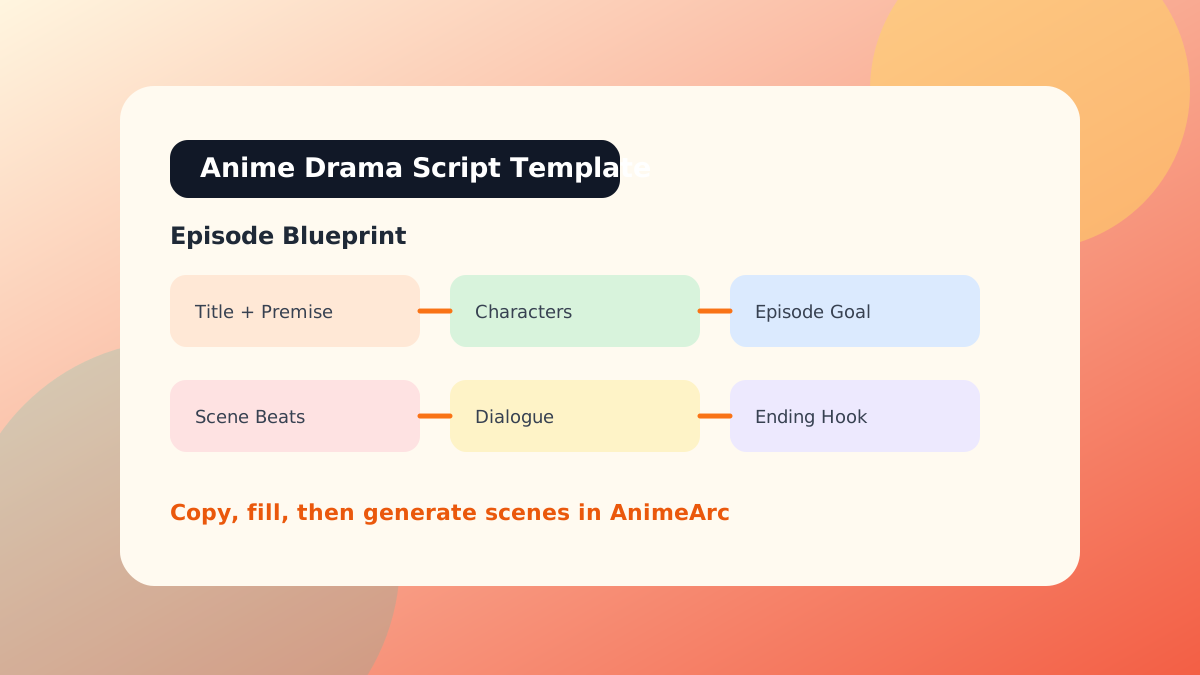 Figure 1: This anime drama script template turns a loose idea into a clear episode blueprint before you generate scenes.
What Is an Anime Drama Script Template?
An anime drama script template is a reusable writing structure for planning short anime episodes. Instead of starting with a blank page, you fill in specific fields: title, premise, characters, episode goal, scene actions, dialogue, and ending hook.
This is different from a full screenplay format. A short anime drama script template is built for speed and production. Each section should give your writing tool, storyboard tool, or video generation workflow enough information to understand the scene.
The template is especially useful when you are moving from story to visuals. A good script block should answer:
- Who appears in the scene?
- Where does the scene happen?
- What action is visible on screen?
- What emotion should the character show?
- What line of dialogue reveals conflict?
- What cliffhanger keeps viewers watching?
The biggest mistake is treating a template like a formality. If you only fill in the title and a few vague scene labels, the template will not improve the final episode. The value comes from making each beat visible. A scene should not simply say “argument happens.” It should show the argument: a character lowering their voice, stepping away from the light, crushing a train ticket, or refusing to look at someone.
For AI anime workflows, the template also becomes a communication layer between writing and visual generation. The fields you choose will influence character prompts, storyboard panels, and video prompts. That is why action, emotion, and camera notes matter. They prevent the generated scene from becoming a generic conversation with no visual tension.
If you want AI to help write the dialogue after your structure is ready, use the AI Anime Script Generator. If you want the entire story pipeline in one place, start with the AI Anime Drama Generator.
Basic Anime Drama Script Structure
For short episodes, keep the structure tight. Most anime drama shorts work well with 4-6 scene beats:
- Opening Hook: A visual or emotional moment that immediately creates curiosity.
- Character Setup: A fast introduction to the protagonist’s goal or problem.
- Conflict Reveal: A rival, secret, deadline, betrayal, or dangerous rule appears.
- Emotional Turn: The character makes a choice or realizes the situation is worse than expected.
- Cliffhanger: The episode ends before the most important answer is revealed.
You do not need long paragraphs. The best script templates use short, visual instructions. For example, “Mina grips the cracked lighthouse key as the foghorn answers in her brother’s voice” is more useful than “Mina feels very scared and confused.”
Think of every scene as a promise to the viewer. The opening hook promises a mystery or conflict. The setup promises a character worth following. The reveal promises that the situation is bigger than expected. The emotional turn promises that the story is not only about events, but about what those events cost the character. The cliffhanger promises that the next episode will answer something specific.
This structure also helps you avoid the common short-video problem of rushing from one random dramatic moment to another. Even in a 60-second episode, the audience should feel cause and effect. The character should make a choice, react to new information, or lose something meaningful before the episode cuts.
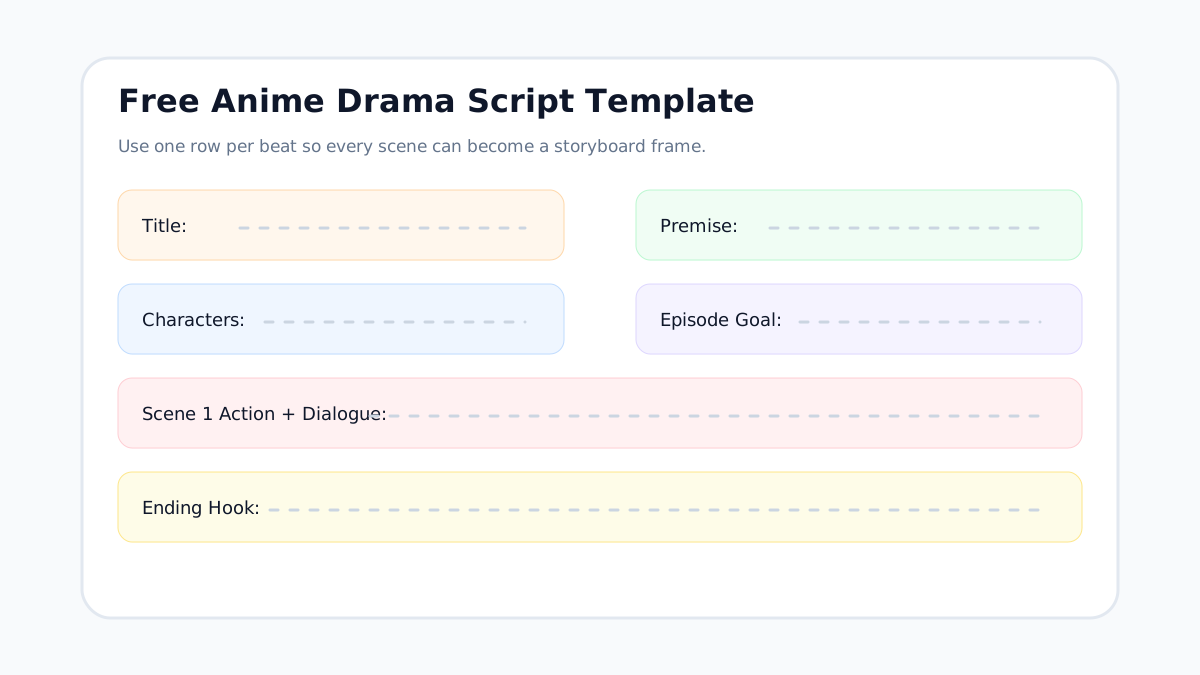 Figure 2: A blank template makes each required story field visible, so the episode can move smoothly into storyboard generation.
Free Anime Drama Script Template
Copy this template and fill it in before generating your episode:
Title:

Premise:

Main Characters:
- Character 1:
- Character 2:
- Rival / Threat:

Episode Goal:

Scene 1: Opening Hook
- Location:
- Action:
- Emotion:
- Dialogue:
- Camera:

Scene 2: Character Setup
- Location:
- Action:
- Emotion:
- Dialogue:
- Camera:

Scene 3: Conflict Reveal
- Location:
- Action:
- Emotion:
- Dialogue:
- Camera:

Scene 4: Emotional Turn
- Location:
- Action:
- Emotion:
- Dialogue:
- Camera:

Ending Hook:

Notes for Visual Style:
The important part is not filling every field perfectly. The goal is to make your story readable by a production workflow. Once the fields are clear, AnimeArc can help you generate characters, episode outlines, storyboards, and video prompts from the same foundation.
When filling the template, use specific nouns instead of abstract labels. “Ancient lighthouse,” “cracked compass,” “fog-covered pier,” and “radio static” are more useful than “mysterious place” or “scary object.” Specific details give your later image and video prompts something stable to reuse.
You should also keep dialogue short. Anime drama shorts usually work better when dialogue reveals pressure quickly. A line like “You buried the wrong brother” creates more story movement than three lines of explanation. The template gives you space to write dialogue, but you do not need to fill it with speeches.
Filled Example
Here is a completed example for a suspense anime short:
Title:
The Lighthouse That Answers Back
Premise:
A girl hears her missing brother's voice coming from an abandoned lighthouse that has been closed for ten years.
Main Characters:
- Mina: 16, stubborn, carries her brother's old compass.
- Kai: Mina's missing brother, heard through the lighthouse signal.
- The Keeper: A faceless figure who appears only when the foghorn sounds.
Episode Goal:
Mina must reach the lighthouse door before midnight to prove Kai is alive.
Scene 1: Opening Hook
- Location: Foggy pier at night.
- Action: Mina hears her brother whisper through a broken radio.
- Emotion: Fear mixed with hope.
- Dialogue: "Kai? Say that again."
- Camera: Slow push-in on the radio speaker.
Scene 2: Character Setup
- Location: The pier gate.
- Action: Mina unlocks a rusted chain with a key from her brother's compass.
- Emotion: Determined.
- Dialogue: "If this is a trick, I'll still find the truth."
- Camera: Close-up on the key turning.
Scene 3: Conflict Reveal
- Location: Lighthouse stairs.
- Action: The foghorn sounds, and every stair behind Mina disappears.
- Emotion: Panic.
- Dialogue: "The way back is gone."
- Camera: High-angle shot looking down the spiral staircase.
Scene 4: Emotional Turn
- Location: Lighthouse door.
- Action: Mina reaches the top and sees two shadows under the door.
- Emotion: Shock.
- Dialogue: "Kai was never alone."
- Camera: Low-angle shot of the door handle moving.
Ending Hook:
A second voice whispers, "Do not open the door."
Notes for Visual Style:
Moody coastal anime, blue-gray fog, warm lighthouse beam, cinematic suspense.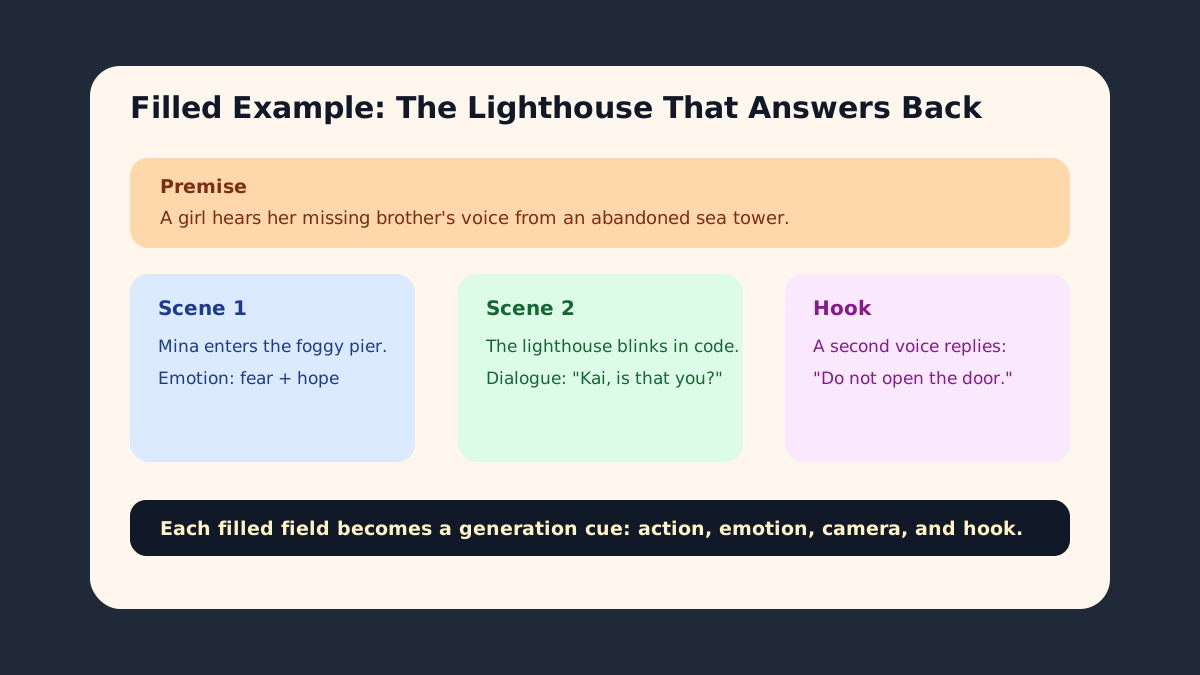 Figure 3: The filled example shows how premise, action, emotion, dialogue, and hook work together in one short anime episode.
How to Turn This Template into an AI-Generated Script
Once your template is filled, the next step is expansion. You can use AnimeArc to turn the structure into a more complete anime drama workflow:
- Start with the premise: Paste the core idea into AnimeArc so the project has a clear story direction.
- Generate or refine characters: Use the AI Anime Character Generator to build character profiles that match the script.
- Expand dialogue: Use the AI Anime Script Generator to turn brief beats into complete scene dialogue.
- Create storyboards: Move the script into the AI Anime Storyboard Generator so each scene becomes a visual panel.
- Prepare video prompts: Use the Anime Video Prompt Template to make each scene easier to render as motion.
Want to turn this template into a full anime drama script? Try AnimeArc’s AI Anime Drama Generator to create characters, scenes, episode outlines, storyboards, and video prompts in minutes.
Before generating, review the template once as if you were the viewer. Does the first scene create a reason to continue? Does the main character have a visible goal? Is the threat specific? Does the ending hook create a question that can be answered in the next episode? If the answer is no, improve the template before expanding it.
You can also reuse the same template for multiple genres. A romance short might use a confession letter as the hook. A fantasy short might use a forbidden spell. A post-apocalyptic short might use a bunker alarm. The fields stay the same, but the story material changes.
Common Mistakes to Avoid
The first mistake is writing scenes that cannot be seen. “The hero remembers the past” is not enough for a short anime drama script. Show the memory through a visible object, sound, or reaction: a cracked pendant, a broken school badge, a voice message, or a character freezing before a familiar door.
The second mistake is giving every scene the same emotional level. If every moment is panic, the episode becomes noisy. Let the template create contrast. Start with curiosity, move into pressure, then use fear or shock near the end. Emotional contrast makes the cliffhanger stronger.
The third mistake is ending with a vague hook. “Something bad happens” is weak. “The missing brother’s voice says, ‘Do not open the door’” is specific. A good hook gives the viewer a concrete question.
Finally, do not skip visual style notes. Even a simple note like “foggy coastal suspense, blue-gray palette, warm lighthouse beam” gives your storyboard and video prompts a stronger direction.
Where This Template Fits in Production
Use the script template after you have a basic story idea but before you generate final visuals. At this stage, you are not trying to polish every line. You are trying to make the episode clear enough for the rest of the pipeline.
The template can become a bridge between multiple assets. The character fields can feed your character profiles. The scene fields can become storyboard panels. The camera notes can become prompt instructions. The ending hook can become the first scene of the next episode.
This is why a template is more valuable than a blank document. It gives every future step a defined input. When the script structure is clean, your generated characters, storyboards, and video prompts are more likely to feel like one connected anime drama instead of separate assets.
FAQ
What is an anime drama script template?
An anime drama script template is a reusable structure for planning short anime episodes. It organizes the title, premise, characters, scene actions, dialogue, emotional beats, and ending hook.
Is this template only for AI-generated anime?
No. You can use it for human-written scripts, manga drama videos, webtoon shorts, visual novels, or AI-assisted animation workflows.
How long should a short anime drama script be?
For a 60-90 second short video, 4-6 scene beats is usually enough. Each scene should include visible action, emotion, and one clear story function.
Can AnimeArc generate the full script from this template?
Yes. You can paste the filled template into AnimeArc and use it as the foundation for a full anime drama project with characters, scripts, storyboards, and prompts.
What should the ending hook include?
The ending hook should raise a specific question: who is behind the door, what secret was revealed, why did the character betray someone, or what danger arrives next.
Ready to move from template to production? Start with the AI Anime Drama Generator and turn your script outline into a visual anime episode.
Want to turn your anime story idea into a short drama workflow?
Submit your story idea with AnimeArc.
Submit My Story Idea